Tuesday, November 5, 2019

Excavation and Trench Safety – Video Production

Excavation and Trench Safety – Video Production

Why is Excavation and Trench Safety Important?

Excavation and trenching are amongst the most dangerous operations in the construction industry. Dangers can include cave-ins, falling loads, hazardous atmospheres and hazards from using heavy equipment. Regular pre-work inspections can reduce hazards and serious risk of injury. Safety inspections should check for the type of excavation being conducted, support and warning systems in place, access areas, weather conditions, heavy equipment and PPE.

10 Excavation Safety Tips

To protect workers from injuries and fatalities, preventive measures should be implemented when workers begin excavating. According to OSHA, general safety measures to follow should cover the following:
  1. Inspect trenches daily before work begins. Don’t go near an unprotected trench.
  2. Check weather conditions before work, be mindful of rain and storms.
  3. Keep heavy equipment away from trench edges.
  4. Be mindful of the location of utilities underground.
  5. Always wear proper protective equipment.
  6. Don’t work beneath raised loads.
  7. Conduct atmosphere tests. If low oxygen and toxic gases were detected, workers must not enter the trench.
  8. Protective systems like benching, sloping, shoring and shielding must be created.
  9. Planning and implementation of safety measures must be done by a competent person.
  10. Use a checklist to perform regular self inspections – download free excavation safety checklists here.
Sources
OSHA Trenching and Excavation Safety
OSHA Excavation Safety Management

Thursday, September 5, 2019

How to generate more leads with your video marketing

Video marketing is estimated to account for 80% of all online traffic by 2021. Here are three expert tips to follow to drive traffic and leads with video.

Video is undoubtedly one of the most popular content mediums being used by marketers right now. It has the ability to showcase your business how you visualize it and convert visitors into paying customers.
The Cisco Visual Networking Index (VNI) Complete Forecast estimates that video will account for 80 percent of all online traffic by 2021. More people are turning to video as opposed to text and other mediums because, not only is it more entertaining, it’s a quicker and more efficient way of consuming information.
But are you sure you’re using video marketing effectively to generate more leads to your business? If not, you aren’t taking full advantage of video’s potential to move consumers further down the conversion funnel. It allows your business to connect with people and persuade them to choose your brand over other options.


Three ways to generate more leads with video marketing

Interested in taking your business to the next level? Follow these three steps to use video marketing to drive traffic and leads to your site.

1. Use gated content

Take advantage of video by using gated content. This is when you hold off on giving visitors something — in this case, video content — until they give you certain information, such as name and email address.
You can do this by adding a form at the beginning of the video or once they’ve watched up to a certain point.
You might think it unusual that people would be interested in filling out their information when trying to watch videos.
However, popular video platform Wistia found that videos with gated content have a 16 percent conversion rate. And for forms that appear in the first 20 percent of the video, the conversion rate bumps up to a whopping 42 percent.
Clearly, gated content comes with its benefits.
But it’s important you do this strategically and with your audience in mind. Think about who’s going to see this video.
If they’re still at the top of the funnel — meaning they’ve only just become aware of your brand and its products — it’s probably not a good idea to ask for their contact information just yet. You have yet to earn their trust and build a relationship of genuine interest before you can move forward.
Save gated content for consumers in the middle of the funnel who are already excited about what you offer and want to learn more. They’re more likely to give out their information because they want to hear from you, and that’s what’ll grant you better lead generation.

2. Add video to your landing page

The entire purpose of a landing page is to convert visitors and push them further down the funnel. So why not incorporate one of the most popular mediums into the equation while you’re at it?
People spend more time on a web page that has video, and one of the most strategic places you could put one is your landing page.
According to a WyzOwl survey, 95 percent of respondents reported to have watched a company’s explainer video to learn more about a product or service. By inserting informational video content in your landing pages, you’re giving visitors the information they need to know in one place while grabbing their attention.
Use video to explain your products and services to viewers. Tell them about your company’s mission and why you do what you do. Encourage them to opt into your email list and what benefits that’ll bring them. Offer them freebies in exchange for their information.
It’s all about being strategic in your approach.

3. Have a clear call to action

If you want to move customers down the funnel, you need to lead the way. One of the best ways you can do this is with a solid call to action.
Do you want viewers to click a link to your landing page once the video’s over? Do you want them to watch another video that explains your products and services in-depth? Are you trying to get them to sign up for your newsletter?
Whatever your actionable goal is with your video, you can’t ignore adding a CTA.
Vidyard conducted a split test and found that there was a conversion rate of 21 percent for viewers who clicked on a CTA at the end of their video. Viewers who weren’t given the CTA converted at just one percent. That’s a huge difference not to take advantage of.
By adding a call to action to your video content, you’re telling viewers what to do except, to them, it feels like you’re leading the way. If they’ve watched your video, you know they already want more. Providing a CTA simply guides them where they want to go.
You can do this by physically adding it into the video itself, including your landing page URL, inserting a “Click Here” button, a thumbnail leading to another video, and more. Most video platforms allow you to insert annotations as well so that people can click your CTA whenever they choose.

What’s next for video marketing?

Video has tons of potential to give your business the kick it needs. If you go at it with a strategy in place, you’ll know exactly what you have to do so that your video content turns into profitable conversions.
Remember to use tactics that best speak to your audience and encourages them to move further down the funnel. In no time, your videos will bring your business the results you’ve been looking for.

Author: Syed Balkhi is Co-founder of OptinMonster, Founder of WPBeginner, Founder of WPForms, and President of Awesome Motive Inc.

September 5th, 2019|Categories: Business Marketing, Business Marketing Video, Marketing Video, Product Marketing Video, Uncategorized, Video Production|Tags: , , , , , , , , , , , ,

Thursday, August 29, 2019

How Successful Brands Will Excel With Social Media Video Marketing in 2020

How Successful Brands Will Excel With Social Media Video Marketing in 2020

To succeed with social media video marketing you will need to adopt a strategy that is more about entertainment, conversing, and education than about selling your goods and/or services.
No one wants to be sold. People do enjoy a good conversation, having their questions answered, and being entertained. Quality content gives people a reason to engage with you on a continuous basis, to come back, and see what’s new. Moreover, it also inspires them to share your brand’s content on their social media and social video channels.
Those brands that excel at branded content stand above those who are mediocre at best. Show me an influencer with social media, and most likely they are excelling with their video content strategy.

Websites Should Be Media Centers

Your website will need to evolve into a video media center. This is even more true today than ever.
People spend thousands on websites which are beautiful, yet generate little or no rankings within search engines. Moreover, they generate almost no new clients at all. Without the proper SEO you have just a dead website. We need reasons for people to find you and engage with your brand. Your about us page on your website can’t always achieve that goal especially without some video content.
You need a video content strategy which produces engaging, share-worthy video content similar to what an entertainment company or a publisher would create.

Video Content Is Your Foundation

Video content opens the door to touch people in a way that traditional marketing and advertising cannot achieve otherwise. If your marketing is completely centered around your products and services, that’s not storytelling. It’s a brochure.
Features rarely do the selling. Packaging, storytelling, sharing important insights, or making people laugh or cry. This is a better strategy to make your brand important to the lives of people and worth being remembered.
Give yourself permission to make your brand’s story bigger and more intriguing.

Social Video Media Marketing Is Your Distribution Channel

There are two overall methods to use social media to get your video content seen through social channels:
  1. Paid Advertising
  2. Organic networking
Paid advertising is the absolute quickest, most assured method to generating traffic and new leads, and opportunities to close more customers. Yes, it can be costly. But so is inactivity, non-productiveness, cold calling, and bankruptcy.
Advertising pushes your content to the right audience.
You should be setting aside 5-10% of your profits to grow your business with intelligent marketing and advertising. A lack of doing this is simply shortsightedness.
When funds are short, particularly when you’re starting out, you have to leverage your time more on organic promotion and networking. But at some point, you need to reinvest a portion of your profits back in advertising so as to sustain growth.
Organic outreach has three aspects to it:
  1. Social Sharing
  2. Individual Networking
  3. Optimization
Social Sharing – Sharing content (your own or that content you curate) to your followers on social channels (Facebook, LinkedIn, Instagram, Twitter, etc). If your content is really good, some of your followers will further share your content to their own followers.
Individual Networking – This is an effort to reach out to people either through a personalized invite, a comment, directly sending them a message and/or a link to content, or in some way instigating a conversation with an individual. For me, LinkedIn is the king of individual networking when conducted correctly and consistently.
Optimization – This is a technique to use keywords and contextual content to increase your chances of having your content found within search queries by online visitors. Since all social video channels (especially YouTube and Linkedin) have search engine capabilities like Google and Bing, your content can be discovered organically through social channels.

Conclusion

This is a overview of what smart brands will be doing in 2020 to win more market share with social media video marketing.

Let us know if we can help with your social media strategy in 2020.
 
 
By |August 27th, 2019|Categories: Business Marketing, Business Marketing Video, Corporate Video Production, Marketing Video, Product Marketing Video, Uncategorized, Video Production|Tags: , , , , , , , , , , , , , , , ,

Training Video Production Services

Award Winning Training Video Production

Training videos are a big part of any successful company, especially companies that have a large number of employees. Using video to train can decrease the time that managers have to spend training employees. Training video production can cover a wide variety of your companies needs, such as safety, sales, rules and benefits.
Training videos can increase worker productivity, promote a safe workplace environment, promote products and services, and can increase overall company productivity.
  • An in-depth training video that covers all aspects of the job requirement will result in a more knowledgeable staff who will know how to perform their tasks correctly.
  • Safety training videos result in safe employees that know how to perform the companies tasks and operate machinery correctly and safely.
  • Product and services training videos promote awareness of products/services, and how to use them properly.
  • Training videos increase increase sales, worker efficiency, decrease accidents, wasted time and decrease costs, etc. This results in overall company productivity

We create all types of training videos:

BusyBoy Productions works with companies to create the right training video production for whatever type of training video your company needs. There are several features used to ensure the creation of a successful training video.


Voice-overs

Voice-over are a nice added feature to the video if it needs any type of narration or audio description. This is especially effective for animated parts of the video, how-to videos, and other videos that don’t use professional actors.

Animation

Animation is not always used in training video production, but it can be used to highlight certain areas of the video. Statistics, pointers, and other types of animation can be added to highlight particular aspects of the video.

Training video production process

BusyBoy Productions utilizes professional equipment for the training video production process, including editing, to ensure that companies receive the highest quality training video. There are four steps to the video production process.
  1. Development – This stage of the training video production process is basically coming up with an outline and a good plan for the video. This covers budgeting, type of video, length of video, target audience, etc.
  2. Pre-production – This stage covers scriptwriting, hiring actors (if needed), storyboards, acquiring props and wardrobe to be used in the video, determining locations for shoots, and more.
  3. Production – This is the actual shooting of the video. Once all the scenes have been shot, it’s time to move on to editing.
  4. Post-production – This covers editing, audio, voice-overs, and delivery to client.
Training video production helps companies excel in more than just sales and monetary increases. Employee efficiency, workplace safety, and product awareness can keep the entire company running smoothly which results in higher productivity, higher customer satisfaction, and a more favorable view of the company as a whole.
Are you located in Minneapolis, St Paul, Minnesota, Fort Myers, Florida or Nashville and looking to produce a training video?
BusyBoy Productions provides professional training video production services for companies, so contact us now to find out what we can do for your next corporate video.
By |August 29th, 2019|Categories: Corporate Video Production, Training Video, Video Production, Videos|Tags: , , , , , , , , , , , , , , , , , , , , , , ,

Monday, August 5, 2019

Visitor Safety Orientation Video Production Tips


Safety orientation videos are also great for showing off your facility to current and future clients, visiting management, or   other guests, without having to lead them through the entire site.  They can experience all your site has to offer without ever leaving the board room. It can also save you money in with your insurance company. Some insurance companies offer discounts when a employee offers safety video training to their visitors and contractors.


Why is it important to have a visitor safety orientation video?
Visitor safety orientation videos are great for any business that may have safety threats to visitors. Often, companies will produce visitor safety videos to replace old and outdated videos with similar information. Visitors may not be aware of what it is like to work in a dangerous workplace need to pay attention to hazards while touring your facility. It is our mission to keep workplaces safe by applying safety video tactics to keep viewers engaged.
Digital safety orientation videos can be hosted on your company website which makes it easy to track who watched, when they watched and how much of the video they watched. Some video hosting providers will allow you to lock down the video to limited viewers and even password protect it like Vimeo.
Here are some visitor safety orientation videos tips.
  1. If you’ll have to pitch this to upper management, go ahead and research which video production company you’ll want to use. Some video production companies are willing to pitch the project and benefits for you.
  2. Make sure you keep in rules that are applicable across the site. If you know your visitor will be in certain areas that have different rules it’s possible to make supplemental videos to cover those areas.
  3. Produce it the same way you would any other video. Make keeping your audience’s attention span a priority, as much as placing importance on content and accuracy.
  4.  Understand that on live equipment video production sets, more tasks must be completed to create a successful orientation video than any other type of video.
  5. Make it a professional video that shows off the quality of your company. A bad quality video doesn’t make your companies brand look good. Some video production companies can produce the a video that won’t date itself quick. Make sure that you’re working with a company that suggest things like this, because it will save your company in the long term.
  6. Save money by having employees do the acting in your visitor safety video. Most people loved to be involved in these types of company projects and it gives your employees more insight on safety in the workplace.
  7. Keep your video within a reasonable time limit. We recommend 3-5 minutes for visitor safety orientation videos and 5-10 minutes for contractor safety videos. We recommend this in order to keep your audience engaged and engagement equals safety education.
https://www.busyboyproductions.com/visitor-safety-orientation-video-production-tips/

Wednesday, July 24, 2019

7 Workplace Safety Tips for Employers

7 Workplace Safety Tips for Employers

Developing a system of safety at your business is important. Educating your employees workplace safety can also save you money in workers compensation claims and insurance rates. The fewer workers’ comp claims that are brought against your business, the lower your rates will be and the more money you save. Contact your   insurance company and find out if rates will be decreased with yearly workers safety video training.
These seven tips can help you create a safer work environment:
  1. Train workers on proper safety protocols. Your employees should be trained to safely execute the duties listed in their job description, including proper lifting techniques and how to handle any hazardous materials that are present in the workplace. Each new employee should be properly trained before beginning work, and it’s important to provide refresher training periodically. Investing in safety training video production can possibly help with lower insurance rates.
  2. Have emergency procedures in place. Develop a written safety plan that clearly outlines a procedure for handling and reporting injuries and emergencies, including phone numbers for first responders. Make sure every employee has read the plan as part of their training, and review it with them as part of your periodic training refreshers such as safety video training. Also, make sure to post the plan in an accessible spot, so it’s easy to reference.
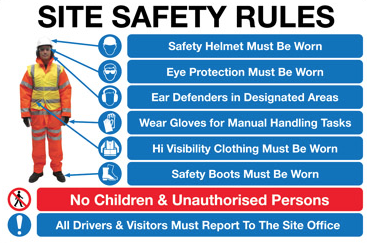
  3. Outfit employees with the proper PPE safety gear to keep them safe. What your employees need as personal protective equipment (PPE) depends on your industry. For example, antibacterial garments keep people safe with food processing, masks with double-ply panels are used by healthcare workers, and industrial workwear is fire retardant and sturdy. An industry association can often provide guidance for your particular workplace. Proper footwear is essential in any workplace. If your employees will be outside, footwear should be appropriate for the weather. Non-slip soles are important in almost every environment. Encourage staff to wear closed-toe shoes at work, and provide sturdy footwear in workplaces where there is a risk of foot injuries.
  4. Post signs and labels where there are hazards. Some hazards are temporary, such as spills that cause a floor to be slippery. Others hazards are more permanent, such as stored chemicals or sharp tools. Be sure to correctly label permanent hazards, and have signs ready for temporary dangers that could impact your business. The Occupational Safety and Health Administration (OSHA) has regulations for what conditions require signs and what the signs need to say.
  5. Maintain tools and equipment. Did you know that more restaurant injuries happen with dull knives than sharp ones? That’s because a dull knife requires more pressure to cut through food, and that increases the likelihood of not just accidental cuts, but also repetitive motion injuries like tendonitis and carpal tunnel syndrome. Any equipment used by your employees should be checked regularly to make sure there are no broken or worn parts, no mechanical malfunctions, and that everything is working as intended. Perform routine maintenance on your equipment so that it can have a longer lifespan and your employees stay safe.
  6. Maintain a clean workplace. Aside from the psychological benefits of reduced clutter in the workplace, it’s also imperative for physical safety. Hallways, walkways, and exit routes should remain free of clutter and debris to avoid tripping hazards. Also be on the lookout for tangled cords, disorganized tools, and boxes that are stacked unsafely.
  7. Consider ergonomic furniture and equipment. People who perform office work also need to think about workplace safety. They might be less likely to be injured from a one-time accident, but they are at risk for back and neck pain, carpal tunnel, headaches, and vision issues. It’s important that employees are educated about proper posture when sitting at a desk. Computers and office devices should be adjusted to the correct height and distance so that your employees are working safely.
By following these workplace safety tips, and others that are specific to your industry or environment, you can enjoy increased employee retention, higher productivity, and reduced workers’ compensation costs. Take a look around your work space today and see where you can make some positive changes.

How safety videos can protect your business, lower insurance rates and help save you money in workers compensation claims

Even when you maintain a safe workplace, some injuries are unavoidable. If an employee is injured or becomes ill, employee safety videos helps protect both the employee and the business. By providing your employees with safe workplace tips with safety training videos can not just save you money but can also save lives.

Tags: , , , , , , , , , , , , ,